Free subtraction within 10 worksheets
Have you ever noticed that subtraction can feel a little trickier than addition for some children?
A child may happily solve addition problems one day, but when it’s time to “take away” numbers, they suddenly need a bit more time and practice. That’s completely normal. Subtraction requires children to think differently about numbers and understand what happens when quantities get smaller.
The best way to build confidence is through plenty of hands-on practice using a variety of activities. When children see subtraction in different ways (e.g., through pictures, number bonds, puzzles, and real-life situations), they develop a stronger understanding of the concept.
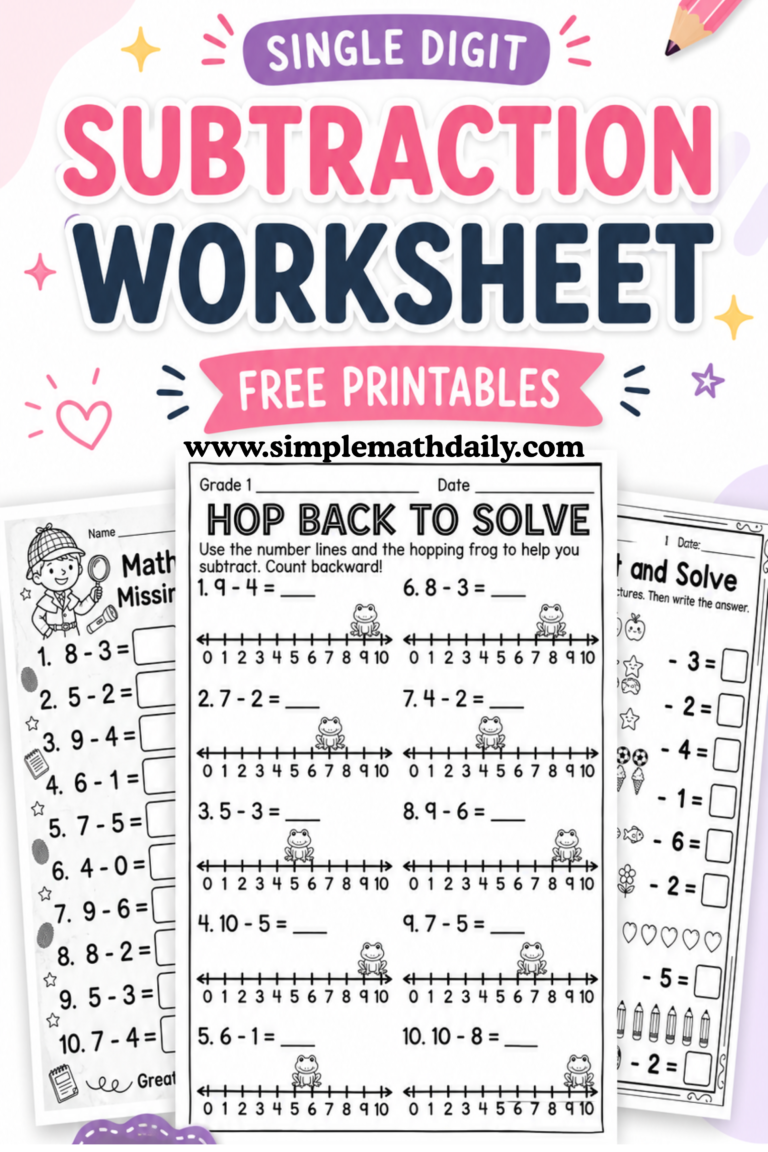
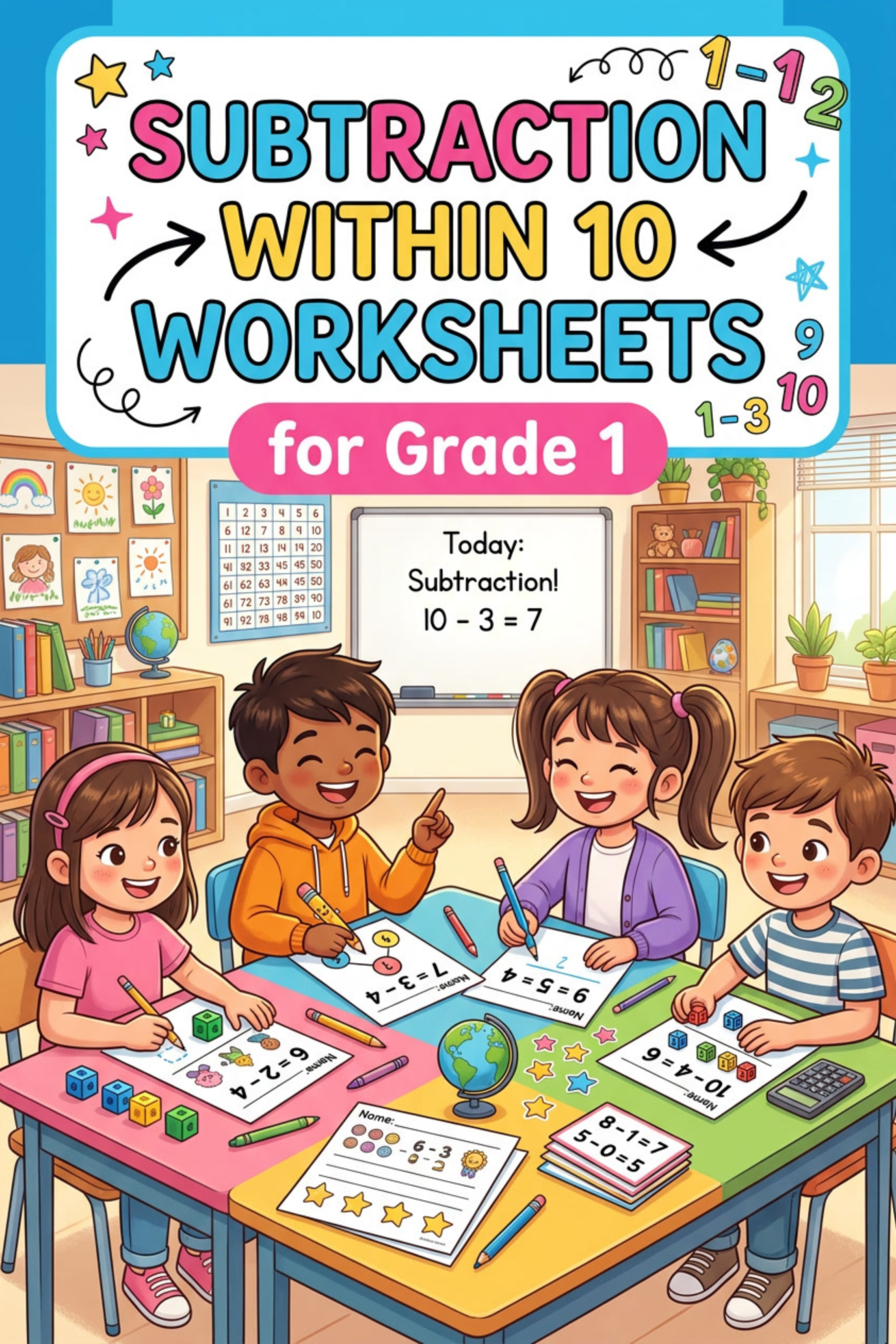
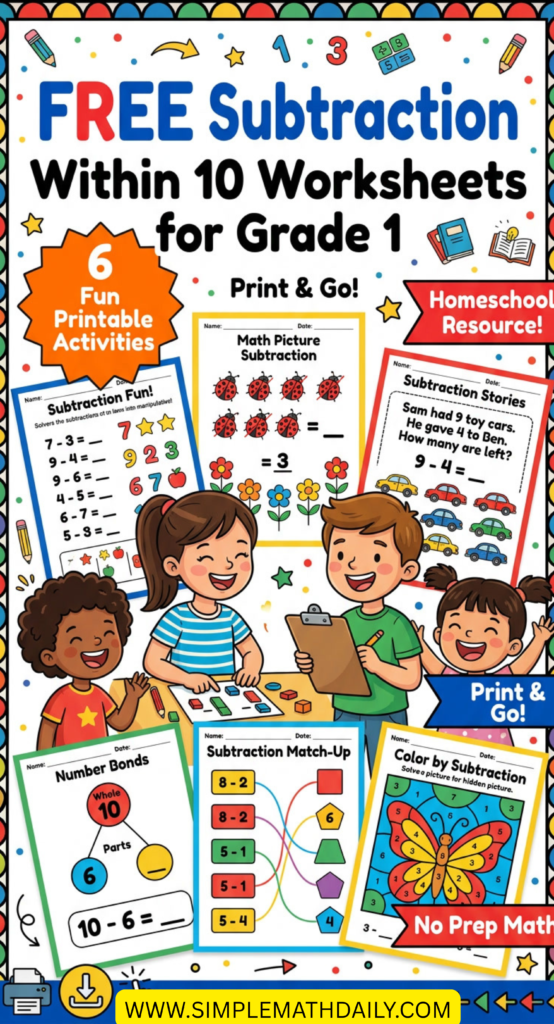
I created this free subtraction within 10 worksheets to help young learners practice essential subtraction skills while keeping math engaging and manageable.
Are you homeschooling, helping with homework, or simply looking for extra practice? These worksheets provide a fun way to strengthen subtraction skills one page at a time.
Let’s go through them!
Pin it for later!
Why practice subtraction within 10?
Subtraction within 10 forms the foundation for future math skills. Before children move on to larger numbers, regrouping, and word problems, they need to feel comfortable subtracting small numbers quickly and accurately.
Regular practice helps children:
- Build number sense
- Understand part-whole relationships
- Improve problem-solving skills
- Develop math confidence
- Prepare for more advanced subtraction concepts
Short, consistent practice sessions often work better than long lessons. Just 10–15 minutes a day can make a big difference.
Free subtraction within 10 worksheets
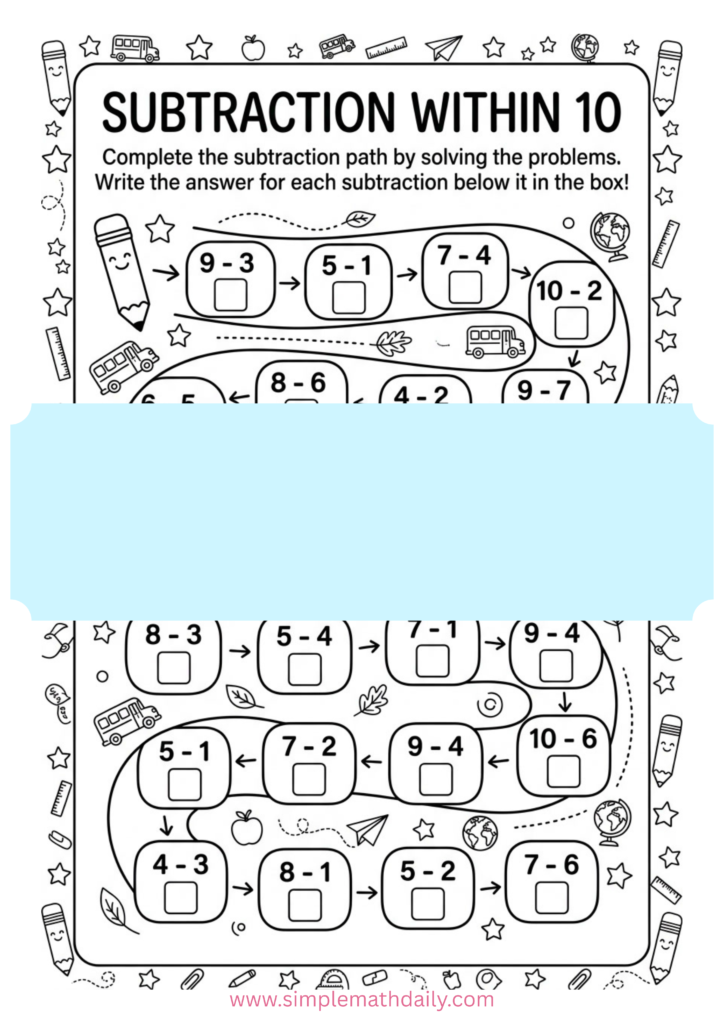
1. Simple subtraction facts
This page gives children plenty of opportunities to practice basic subtraction equations within 10.
Examples include:
- 8 − 3
- 10 − 4
- 7 − 2
This activity helps build subtraction fluency and encourages children to recognize common subtraction facts more quickly.
How to use it: Start with this page to warm up. Encourage your child to solve the problems independently and then check their work together.
Download A4 worksheet
Download US worksheet
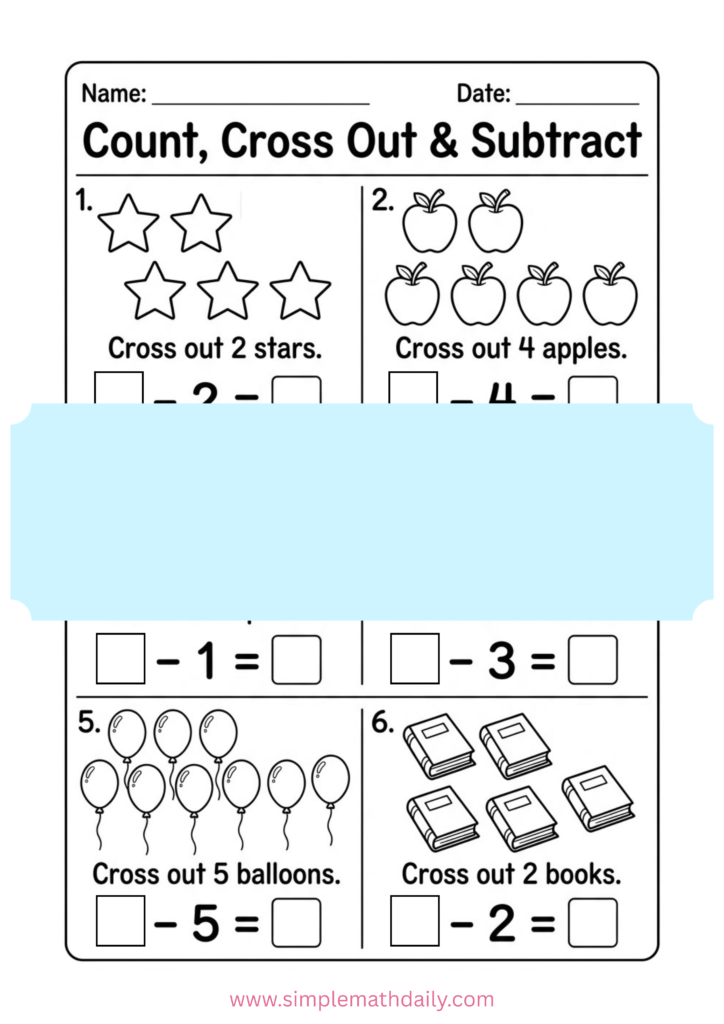
2. Count, cross out and subtract
Children count a group of objects, cross out the amount being taken away, and then complete the subtraction equation.
This visual approach helps young learners understand what subtraction actually means instead of simply memorizing facts.
How to use it: Have your child physically cross out the objects as they solve each problem. This concrete method is especially helpful for children who are still developing number sense.
Download A4 worksheet
Download US worksheet
Looking for even more simple, stress-free math activities? Be sure to grab my free 10-Minute Math Starter Pack (Week 1) for quick daily lessons that help build confidence and make math practice easier for parents and kids alike.
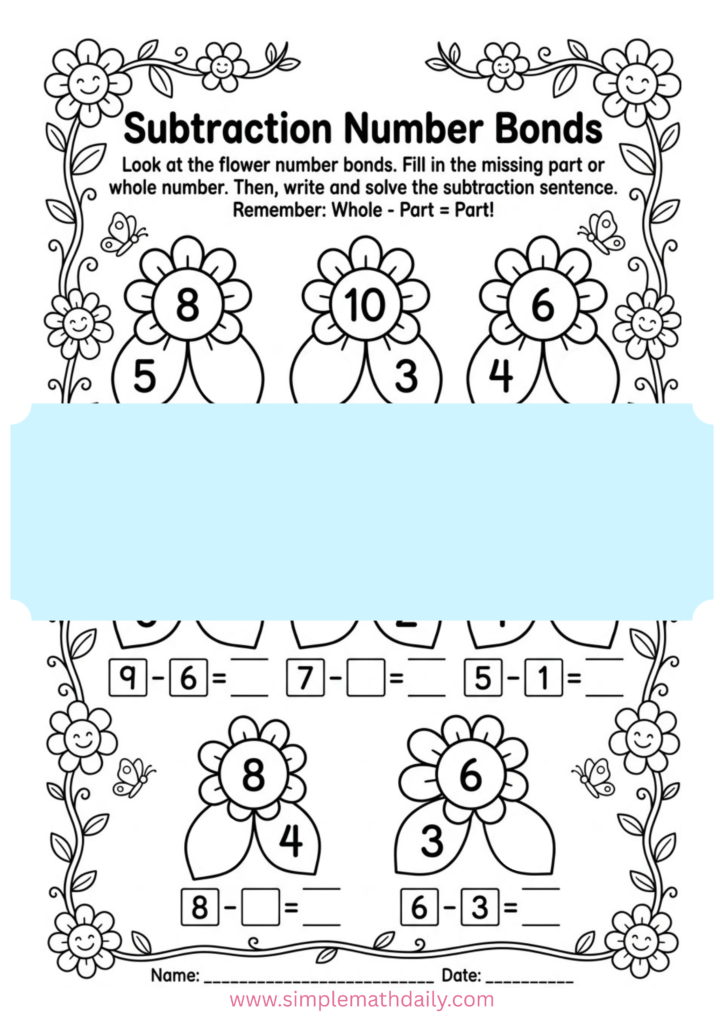
3. Subtraction number bonds
Number bonds help children see how numbers are connected.
On this page, children complete number bond diagrams and solve related subtraction equations.
For example:
- Whole = 10
- Part = 4
- Missing part = 6
This activity strengthens understanding of part-part-whole relationships, which is an important foundation for future math concepts.
How to use it: Encourage your child to talk through their thinking as they fill in the missing parts.
Download A4 worksheet
Download US worksheet
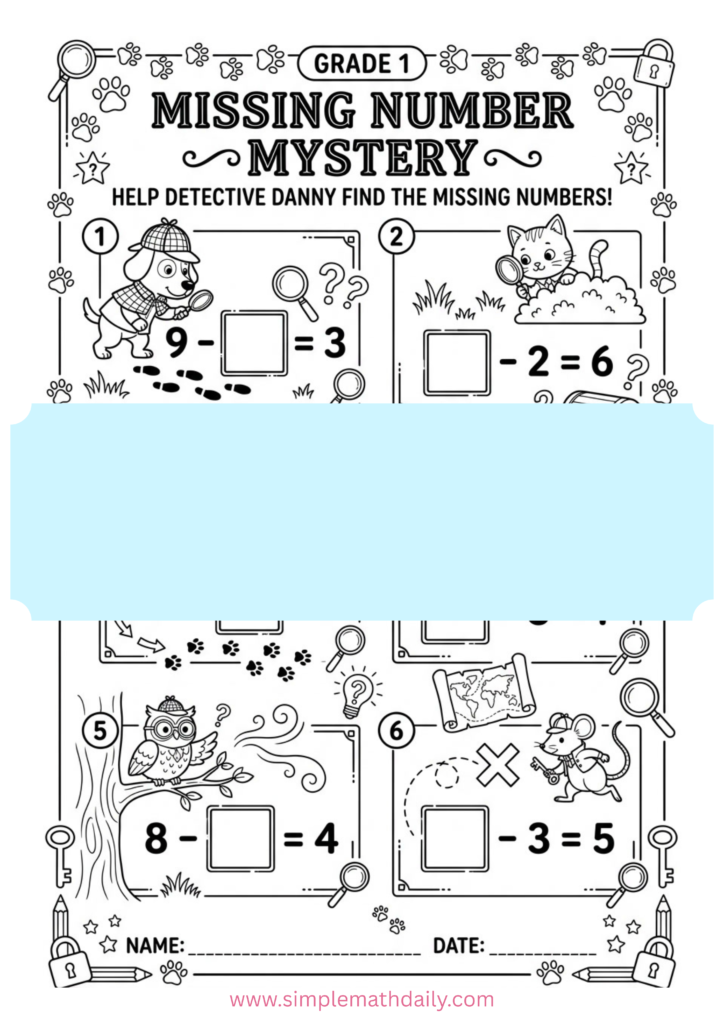
4. Missing number mystery
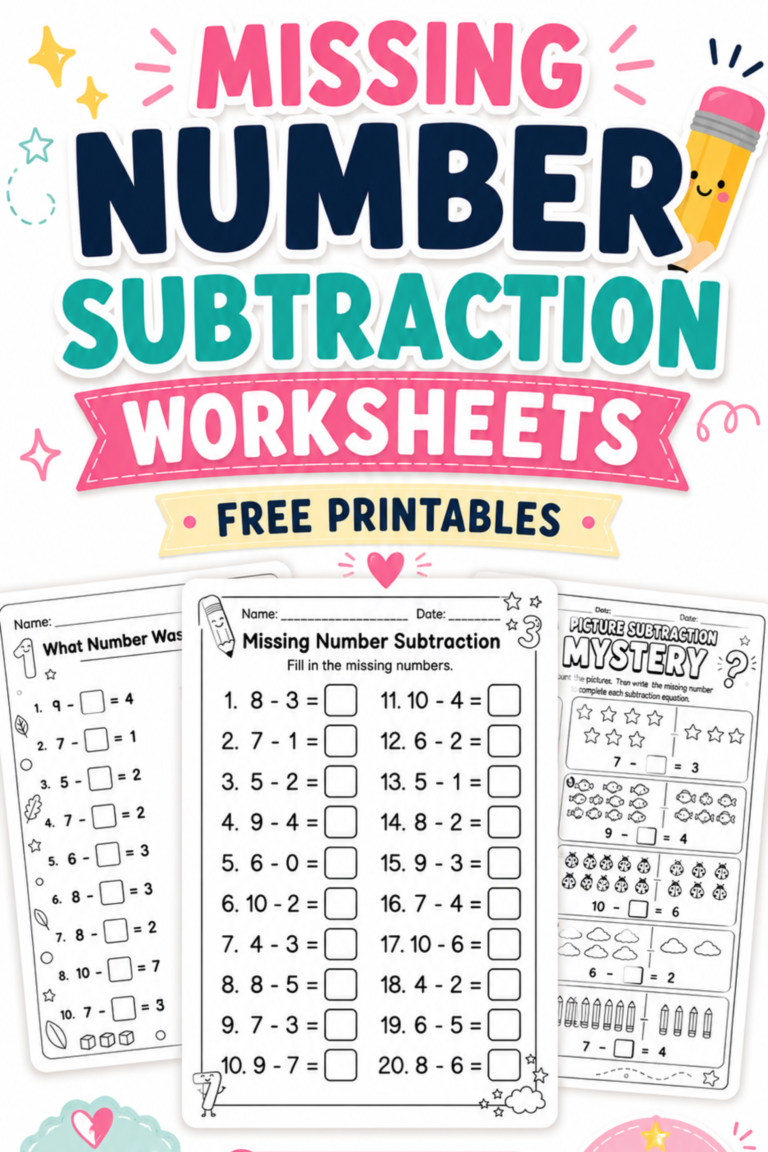
This worksheet introduces a fun challenge by asking children to find missing numbers in subtraction equations.
Examples include:
- □ − 2 = 5
- 9 − □ = 4
Rather than simply calculating answers, children must think about the relationship between the numbers.
How to use it: If your child gets stuck, encourage them to use counters, blocks, or draw pictures to model the problem.
Download A4 worksheet
Download US worksheet
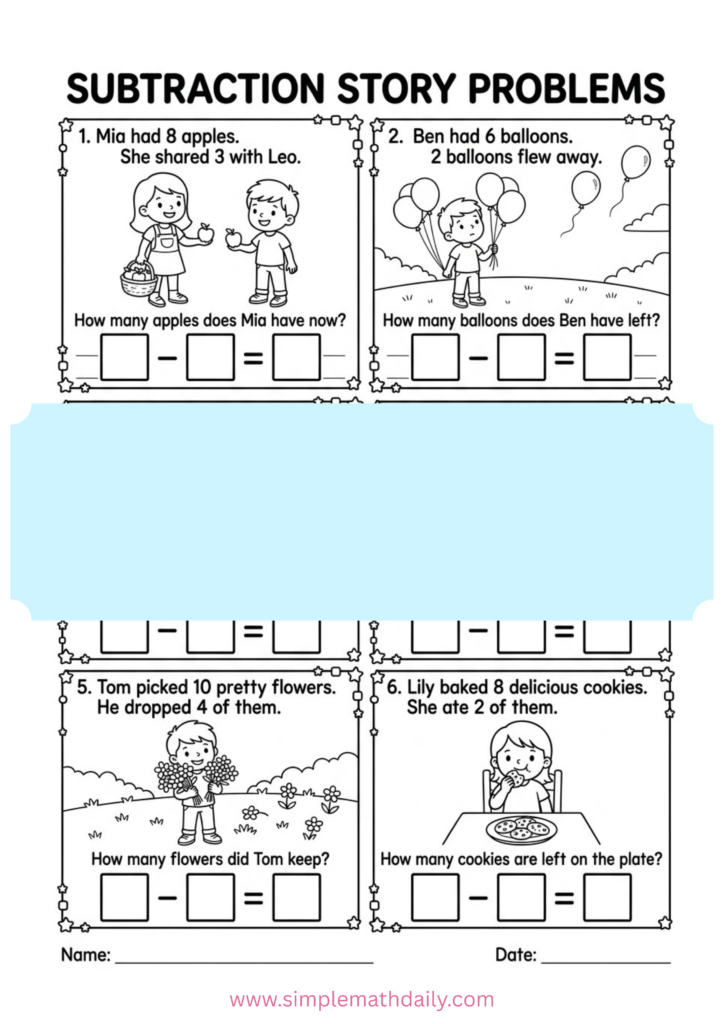
5. Subtraction story problems
Word problems help children apply subtraction skills to real-life situations.
Students read short stories and decide how to solve each problem.
Examples may include:
- Sharing toys
- Losing balloons
- Giving away flowers
- Eating cookies
Story problems encourage critical thinking and help children understand when subtraction is used in everyday life.
How to use it: Read each problem aloud together and ask your child to explain why subtraction is the correct operation.
Download A4 worksheet
Download US worksheet
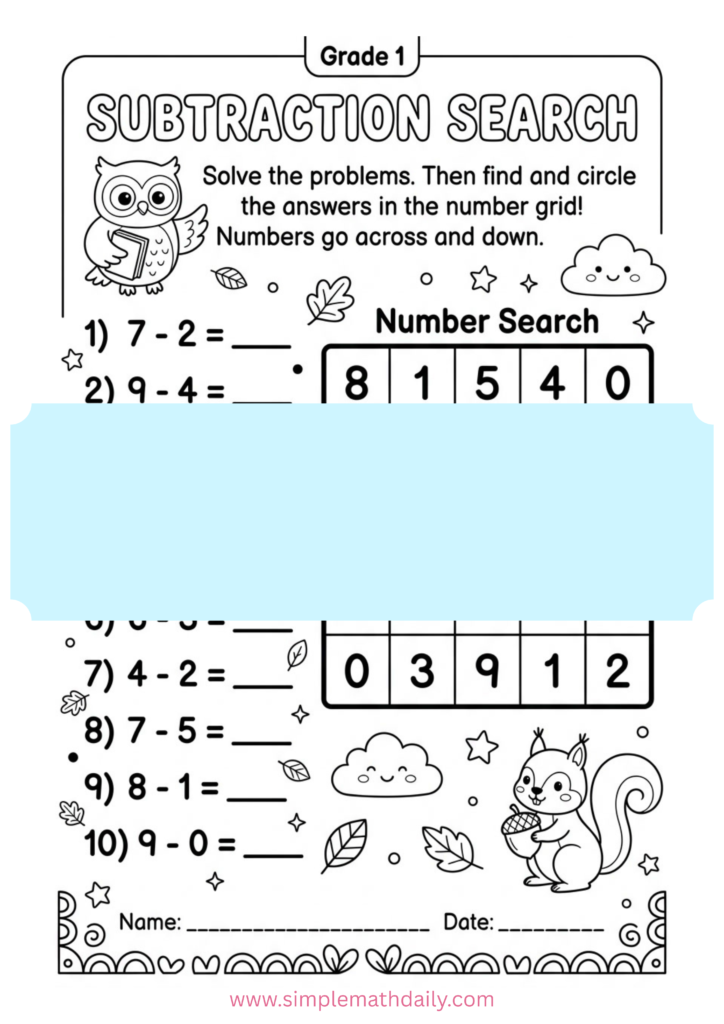
6. Subtraction search
This fun activity combines subtraction practice with a number search puzzle.
Children solve subtraction problems and then find the answers hidden inside a number grid.
This activity feels more like a game while still reinforcing important subtraction skills.
How to use it: Save this page for the end of the lesson as a fun review activity or independent practice.
Download A4 worksheet
Download US worksheet
Tips for helping your child learn subtraction
Every child learns at a different pace. If subtraction feels challenging at first, that’s completely normal.
Here are a few simple ways to support learning:
- Use everyday objects such as snacks, toys, or blocks.
- Encourage counting backward.
- Practice with short daily sessions.
- Celebrate effort, not just correct answers.
- Allow your child to use drawings and visual models.
Building confidence is often just as important as building math skills.
Conclusion
These subtraction within 10 worksheets are designed to give first graders a variety of subtraction practice while keeping learning fun and engaging.
From simple subtraction facts to visual activities, number bonds, story problems, and puzzles, this printable pack helps children strengthen essential math skills one step at a time.
Simply download, print, and start practicing today!