Free missing number addition worksheets
When I was a child, math didn’t always come easily to me.
I still remember sitting at the kitchen table with my mother as she patiently helped me work through math problems. While some children seemed to understand numbers right away, I often needed a little extra practice and encouragement.
Looking back, those moments made a huge difference.
My mother never rushed me. She simply sat beside me, helped me think through the problems, and gave me the confidence to keep trying.
That’s one of the reasons I love creating printable math activities for young learners today.
One thing I’ve learned is that children often understand more than we realize—they just need opportunities to think about numbers in different ways.
A child might quickly solve a simple addition problem, but when a number is missing from the equation, they have to slow down and really think about how the numbers fit together.
That’s what makes missing number activities so valuable.
Instead of simply finding the answer, children learn to recognize number relationships, strengthen their problem-solving skills, and develop a deeper understanding of addition.
These early number sense skills create a strong foundation for future math learning and can help children feel more confident as new concepts are introduced.
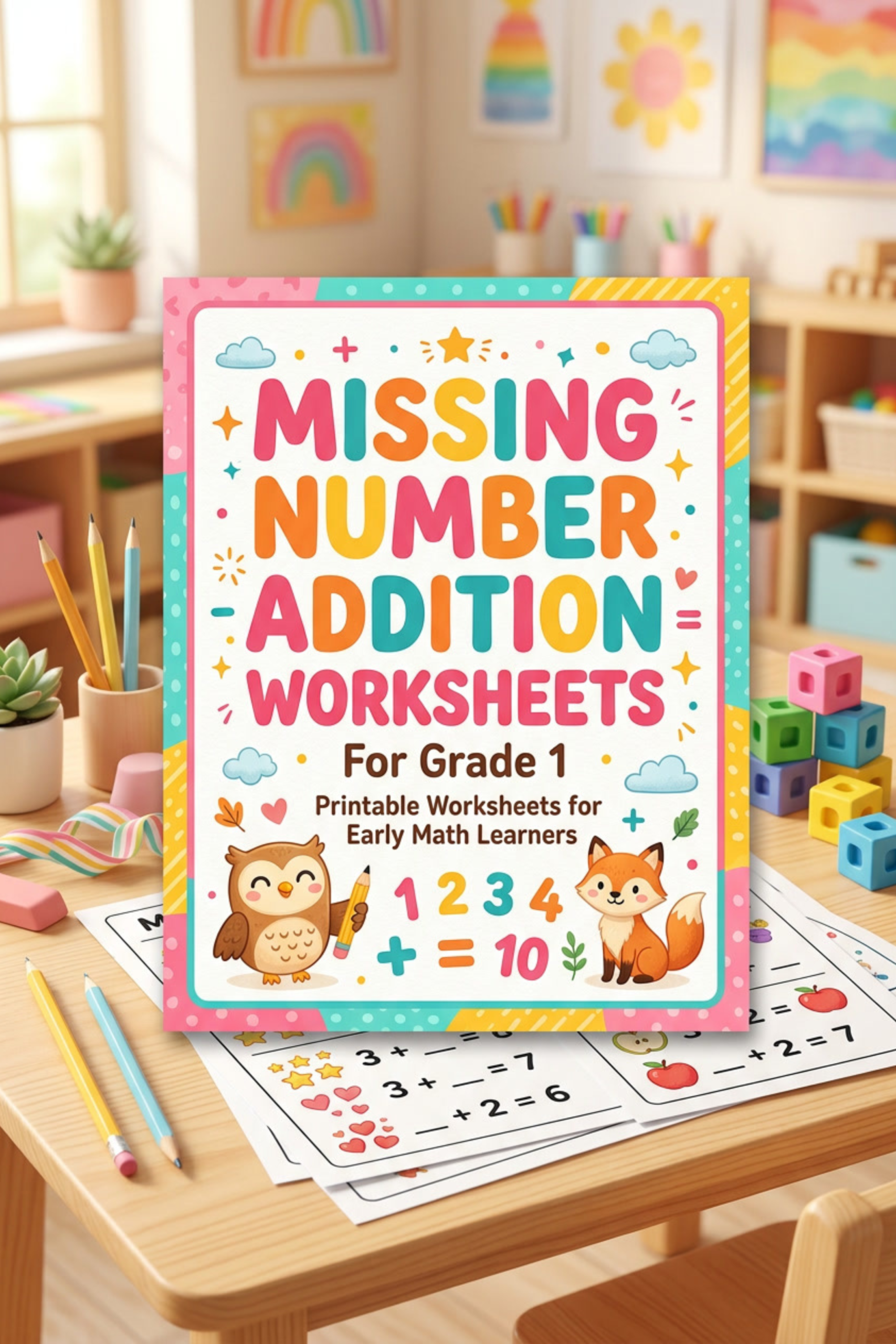
To make practicing this skill easier and more enjoyable, I created these free missing number addition worksheets for Grade 1.
They include six engaging worksheets that give first graders plenty of opportunities to practice finding missing addends while building addition fluency and confidence along the way.
Before getting into it, don’t forget to grab my 10-Minute Math Starter Pack — Week 1.
It includes simple, structured activities that build confidence step by step, helping children ease into their math routine from day one.
Each page focuses on clear, foundational concepts with plenty of repetition and visual support, so kids can practice independently while still feeling successful. Whether you’re homeschooling or supporting learning at home, this freebie is a great way to start building strong math habits in a calm and encouraging way.
Now, let’s walk through these free missing number addition worksheets!
Pin it for later!
Free missing number addition worksheets
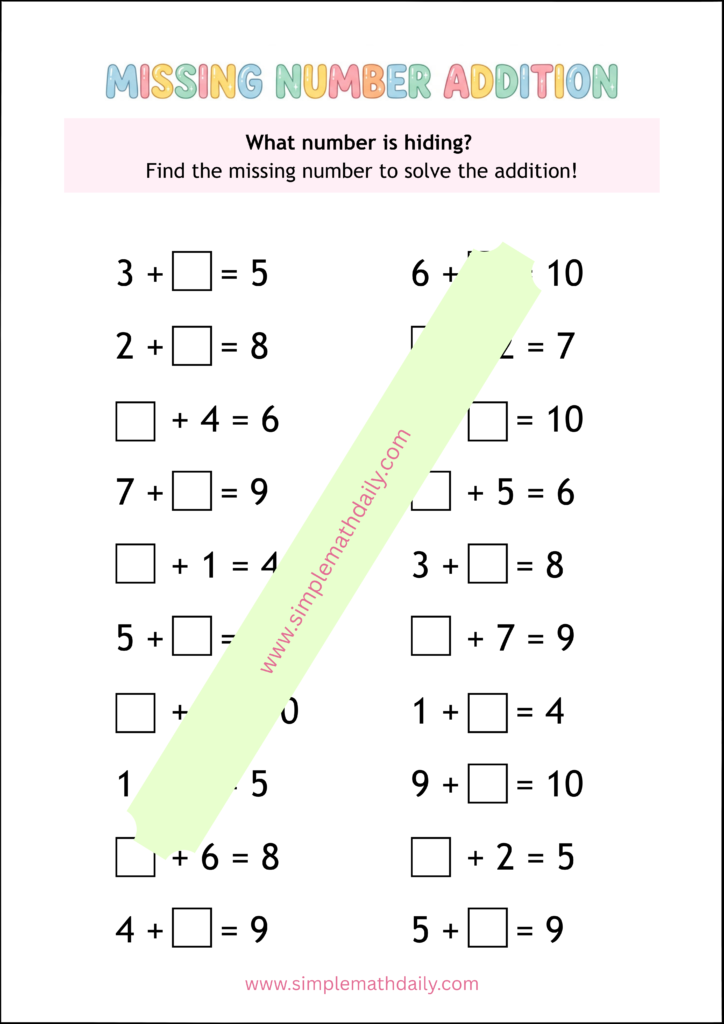
1. Missing number addition facts
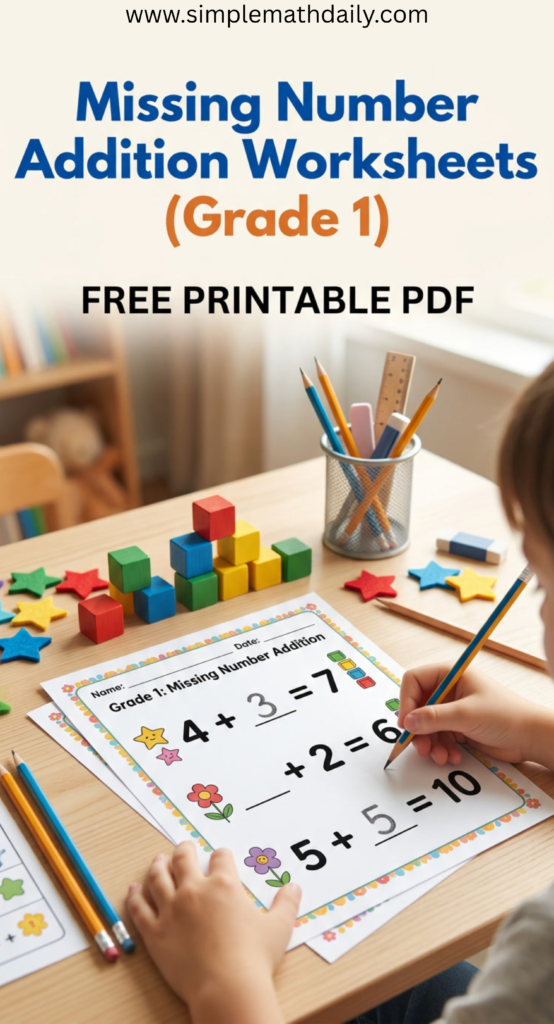
Children solve simple addition equations by finding the missing addend.
Examples include:
- 3 + □ = 7
- □ + 2 = 5
- 4 + □ = 9
This page helps children understand how numbers work together to make a sum.
Download A4 worksheet
Download US worksheet
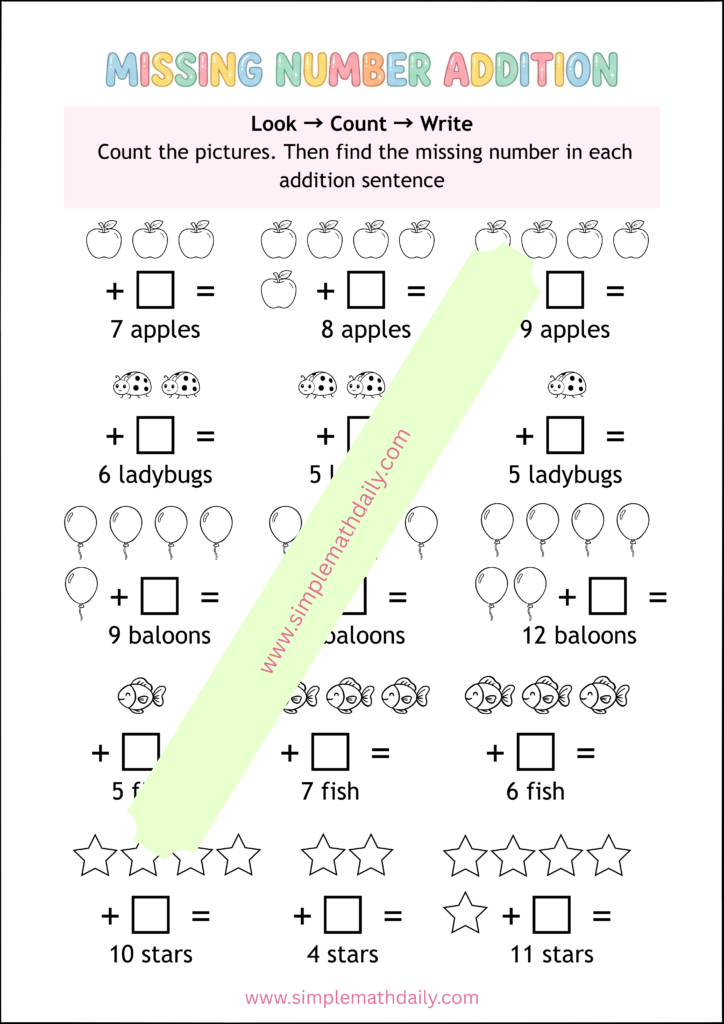
2. Count and find the missing number
This worksheet combines pictures and addition.
Children count groups of objects and determine the missing number needed to complete the equation.
Visual learners often benefit from seeing addition represented with concrete objects before moving to abstract numbers.
Download the A4 worksheet
Download the US worksheet
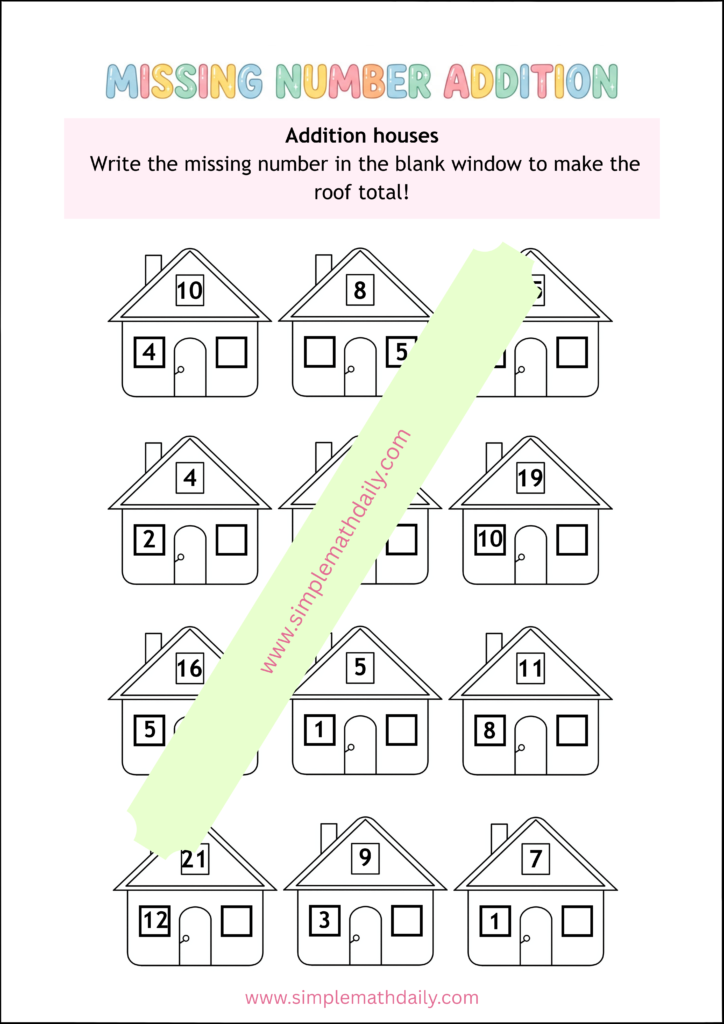
3. Addition houses
In this fun activity, each house displays a total number on the roof while one window is left blank.
Children must determine the missing part that completes the total.
This format encourages children to think about addition in a visual and engaging way.
Download the A4 worksheet
Download the US worksheet
Why missing number activities are important
Many children can memorize addition facts without fully understanding how numbers relate to one another.
Missing number problems encourage children to:
- Develop stronger number sense
- Understand part-part-whole relationships
- Improve mental math skills
- Build confidence with addition facts
- Prepare for subtraction concepts later on
Rather than simply calculating an answer, children must think about the missing piece of the equation.
This type of reasoning is an important foundation for future math success.
How to use these worksheets
These worksheets work well for:
- Homeschool math lessons
- After-school practice
- Math centers
- Independent seat work
- Summer learning review
- Homework reinforcement
For best results, encourage your child to use manipulatives such as counters, blocks, or small toys when solving problems if they need extra support.
As confidence grows, they can begin solving the equations mentally.
Conclusion
When I look back at my own learning experience, I realize that addition was never really about getting the “right” answer straight away, but slowly understanding how numbers connect and support each other.
That’s something I see so clearly when children work with missing number activities. They don’t just calculate; they pause, think, and start to notice patterns in numbers. Over time, this kind of practice builds stronger number sense, and more importantly, it builds confidence.
Every child learns at their own pace. Some will grasp addition quickly, while others—like I once did—need a bit more repetition, encouragement, and gentle practice to feel secure with it. Both are completely okay.
If your child is just starting out with addition or simply needs extra reinforcement, I hope these missing number addition worksheets make practice feel more approachable and less overwhelming. My goal has always been to turn math into something that feels calm, clear, and even a little enjoyable at home.
I truly hope these printables bring a bit more ease to your daily math routine and create those small “aha” moments for your child.
Happy learning!