7 Hands-on addition activities using things you already have
If your child struggles with addition, you do not need expensive learning kits, fancy printables, or hours of lesson planning.
And you definitely do not need to turn your home into a classroom.
The truth is, some of the best addition practice happens during ordinary moments with things already sitting around your house.
For many children, addition feels confusing because numbers can seem abstract. Looking at “4 + 3” on a worksheet is very different from physically holding four crackers, adding three more, and seeing the total become seven.
That hands-on experience helps math click.
The good news is that everyday objects can become powerful learning tools when used with a little intention.
Here are simple, playful addition activities that make practice feel natural and stress-free.
Pin it for later!
Simple hands-on addition activities
1. Turn snack time into addition practice
Snack time is one of the easiest opportunities to build number confidence.
Children naturally enjoy touching, moving, and counting food, which makes learning feel playful instead of forced.
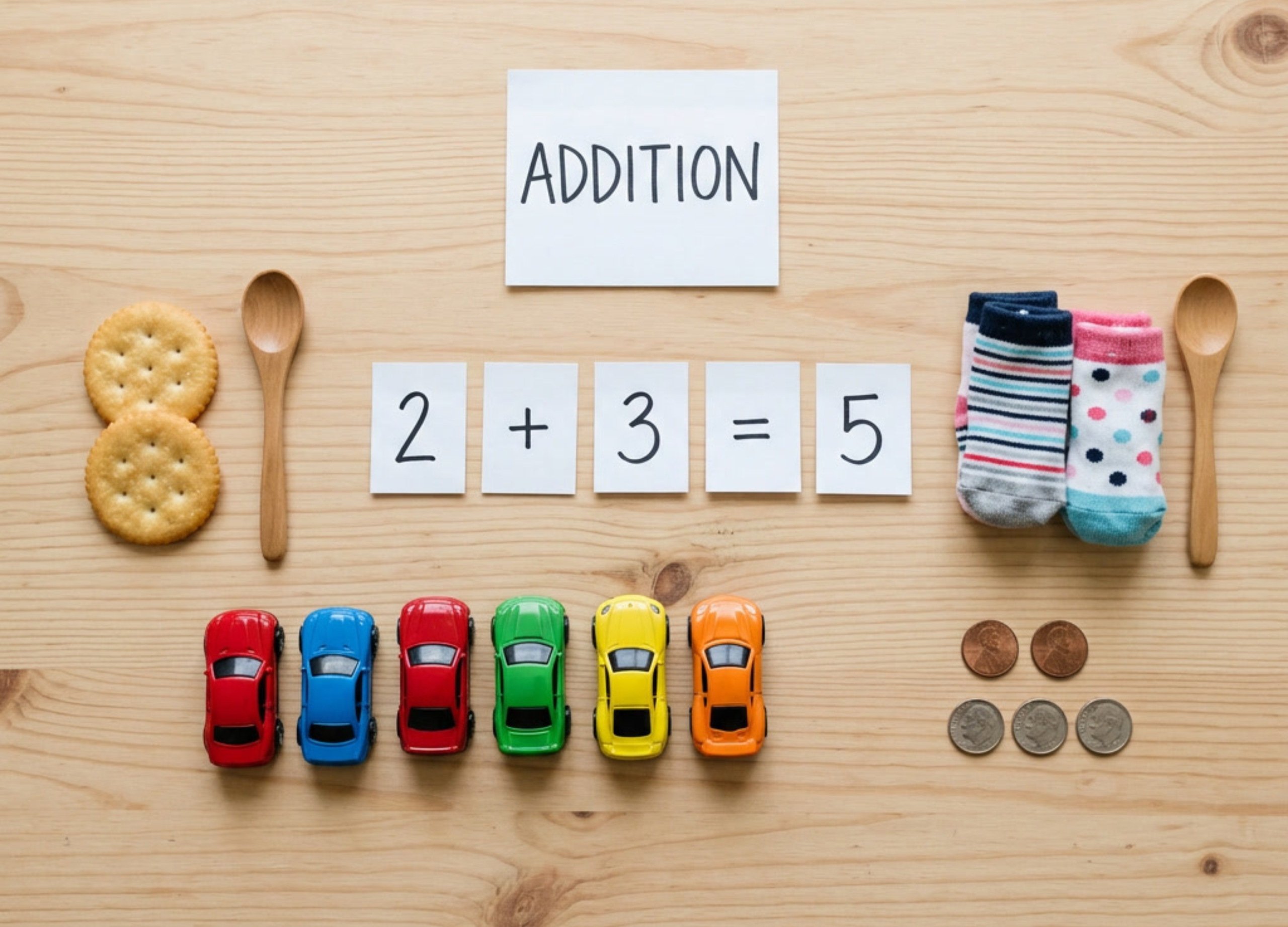
You might place 4 crackers in front of your child and then add 3 more.
Ask questions like:
- “How many crackers did we start with?”
- “How many did we add?”
- “How many do we have altogether now?”
Let them physically move the crackers together and count the total themselves.
This simple action helps children understand what addition really means: combining groups to make a bigger number.
Because they can see and touch the process, the math feels concrete instead of confusing.
And of course, getting to eat the answer makes it extra motivating.
Busy parents love this one because it adds learning into something you are already doing anyway.
2. Use toys they already love
If your child has toy cars, blocks, dolls, LEGO pieces, stuffed animals, or action figures, you already have a math lesson waiting.
Children connect more deeply when learning feels playful and familiar.
Try creating two groups of toys.
For example:
- 5 toy cars parked in one “garage”
- 2 toy cars parked in another
Then ask:
“How many cars are there altogether if they all park together?”
Let your child physically move the toys into one group and count.
This movement helps their brain connect the idea of addition with real action.
You can make it even more engaging by turning it into a story:
“Three dinosaurs were eating lunch. Then two more dinosaurs came to join them. How many dinosaurs are eating now?”
When math becomes storytelling and play, children often stop seeing it as “work.”
3. Make laundry time a math activity
Laundry may not sound exciting, but it is actually perfect for hands-on addition practice.
As you sort clothes, invite your child to help count and combine.
For example:
“We have 3 blue socks here and 2 white socks here. How many socks altogether?”
They can move the socks into one pile and count as they combine.
This works beautifully because children can physically see two groups becoming one larger group.
It also shows them that math is not something that only happens in books or worksheets.
Math is part of real life.
And for parents, this is a win because it adds learning without creating extra work in your day.
4. Play an easy dice addition game
If you have dice at home, you have an instant addition activity.
Roll two dice and ask your child to add the numbers together.
For younger children, they can count each dot one at a time.
For example:
One die shows 4.
The other shows 3.
They count:
1, 2, 3, 4… then 5, 6, 7.
Older children can begin solving mentally:
“4 plus 3 makes 7.”
This activity strengthens both counting skills and mental math confidence.
You can make it even more fun by turning it into a family game.
Each player rolls, solves, and keeps score.
Children often practice far longer when it feels like play instead of practice.
5. Practice addition with coins
Coins are fantastic for building number sense because they feel “important” and real to kids.
Most children get excited anytime they are allowed to handle money.
Start simple by counting the number of coins.
For example:
- 4 pennies
- 2 pennies
Ask:
“How many coins altogether?”
Once they are comfortable, you can introduce coin values:
“If we have 5 cents and add 10 more cents, how much do we have?”
This connects addition to everyday life and helps children understand why math matters.
It becomes more than just solving numbers on paper.
It becomes useful.
6. Create a sticky note number hunt
If your child has lots of energy, this one is incredibly effective.
Write numbers on sticky notes or scraps of paper and hide them around the room.
Ask your child to find two numbers and bring them back to solve the addition problem.
For example, they might find:
6 and 2
Then solve:
6 + 2 = 8
This combines movement with learning, which is especially helpful for children who struggle to sit still during math practice.
The excitement of searching keeps their brain engaged, and the physical activity helps many kids focus better.
It feels like a treasure hunt, not a lesson.
7. Bring math into the kitchen
The kitchen is full of natural math tools.
Spoons, forks, measuring cups, fruit, containers — all of it can become hands-on addition practice.
You might place:
- 3 spoons on one side
- 4 spoons on the other
Then ask:
“How many spoons do we have altogether?”
Your child combines them and counts.
This works especially well while cooking dinner because learning happens naturally in the middle of family life.
And because the objects are familiar, children feel relaxed and curious instead of pressured.
That relaxed mindset often makes learning easier.
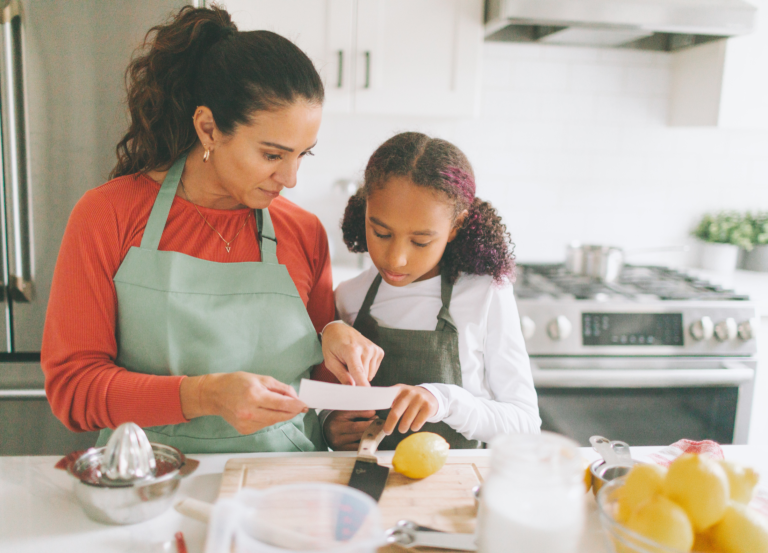
POST: 8 kitchen math activities to do with your kids
Need a weekly plan?
If you are ready to make math practice feel easier at home, my free 10-Minute Math Starter Pack — Week 1 gives you everything you need to get started.
Inside, you will get a full week of printable math worksheets plus a simple daily plan that shows you exactly which worksheet to use each day.
There is no guesswork and no wondering what to do next.
Just follow the plan, spend 10 focused minutes a day, and help your child build stronger math confidence one small step at a time.
Download your free starter pack here and start this week.
Final thoughts
Children do not usually struggle with addition because they are “bad at math.”
More often, they struggle because addition has been introduced too abstractly.
Worksheets show symbols.
Hands-on activities show meaning.
When children can physically combine objects, count what changed, and see the answer appear in front of them, understanding grows naturally.
And once understanding is there, confidence follows.
The best part?
You do not need to carve out huge blocks of teaching time.
Just 5–10 minutes during ordinary moments can build powerful math skills over time.
That is often all it takes to help addition finally click.